
ELEVATE YOUR BACKYARD TRAINING by choosing the right equipment for the space you have.
When you are setting up a practice area at home, you usually run into the same problem: a regulation baseball is too dangerous for the windows, and a plastic wiffle ball is too light to provide any real feedback. This leads most players and parents to two popular alternatives: weighted training balls (often called "plyo balls") and limited flight baseballs like LoFli.
While both serve a purpose in a player’s bag, they are designed for very different results. Understanding the technical differences in weight, safety, and flight path is the key to building a better swing or a stronger arm without ending up with a broken neighbor's window.
Weighted training balls are specialized tools designed primarily for building arm strength and improving pitching velocity. These balls are usually filled with sand or a similar weighted material and encased in a thick, rubbery shell. They come in various weights, ranging from under-load (3-4 oz) to significant over-load (up to 2 lbs or more).
The primary goal of a weighted ball is resistance training. By throwing a ball that is heavier than a 5 oz regulation baseball, a pitcher can develop the specific muscle groups in the shoulder and arm required for high-velocity throws. However, these balls are not typically intended for "live" play or standard batting practice.
Because of their density and weight, weighted balls carry an incredible amount of momentum. If you miss a net in your backyard with a 1-lb weighted ball, the potential for damage to a fence or a window is significantly higher than with a standard ball. Furthermore, research indicates that using weighted balls for pitching development requires professional supervision. Without proper mechanics, the increased stress on the elbow and shoulder can lead to a higher risk of injury.
Limited flight baseballs, such as the LoFli Training Ball, are designed to bridge the gap between a "real" baseball and a safety ball. Unlike weighted balls, LoFli balls match the regulation weight of a standard baseball: exactly 5 ounces. They also match the official size and feature realistic seams to provide an authentic grip.
The "limited flight" aspect comes from the material and construction. These balls are engineered to reduce flight distance by approximately 50%. This means you can take a full, aggressive swing in a backyard or a gym, and the ball will only travel half as far as a standard baseball would.
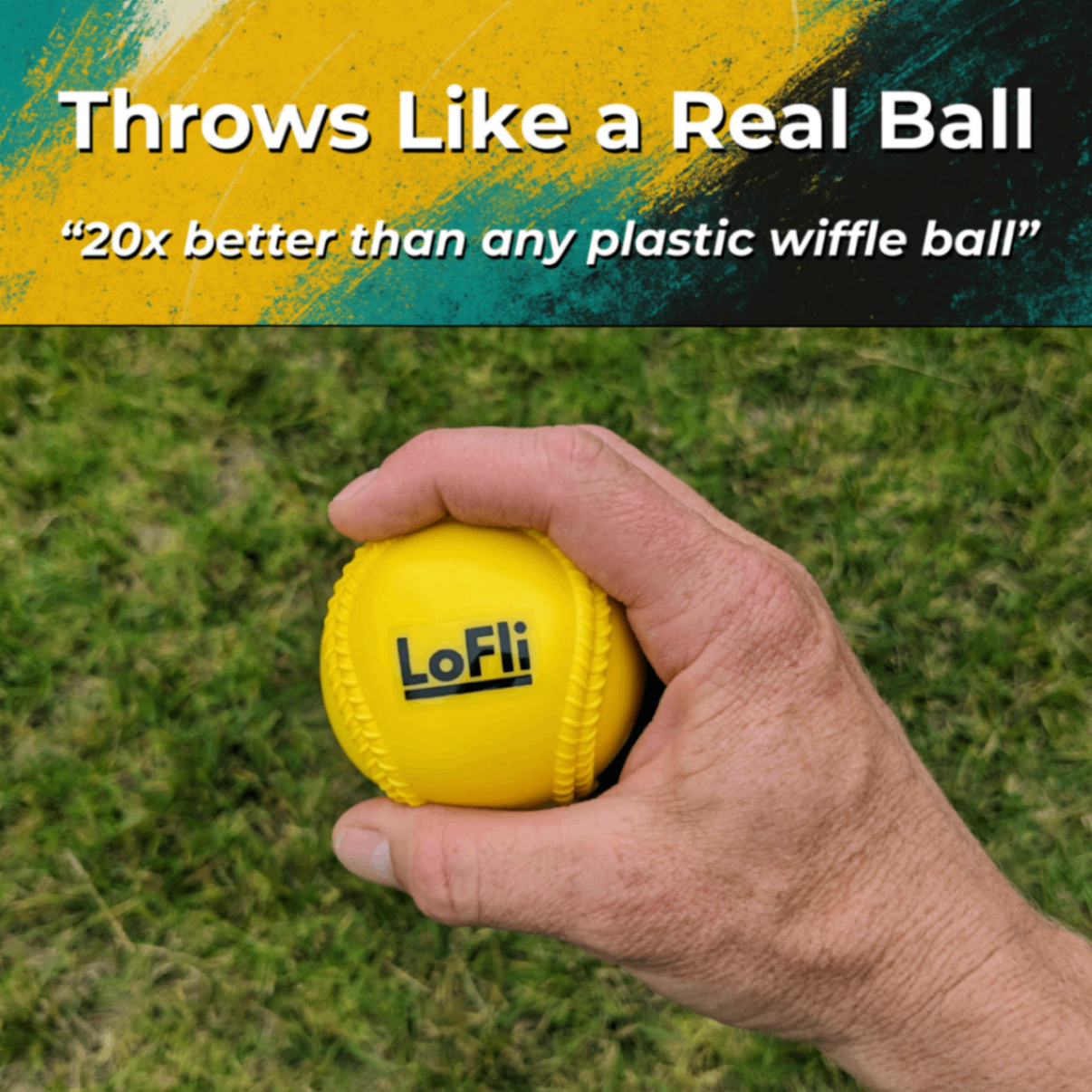
LoFli balls are designed to:
One of the most common mistakes in backyard training is practicing with a ball that is either too heavy or too light. This is where the comparison between weighted balls and LoFli becomes critical.
When you throw or hit a ball that weighs more than 5 ounces, your brain and muscles adjust to that specific resistance. While this is great for strength training in a controlled environment, it can actually hurt your "feel" for a real game ball. If you spend all afternoon hitting a 12-ounce weighted ball, a real 5-ounce baseball will feel like a feather during your next game, often leading to timing issues and "casting" in the swing.
Conversely, hollow plastic balls are far too light. They don't provide the "pop" off the bat that a player needs to feel if they’ve made solid contact.
LoFli maintains that 5-ounce standard. Whether you are throwing across the yard or hitting off a tee, your body receives regulation-weight feedback similar to a game ball. This helps maintain muscle memory and ensures that your backyard practice translates directly to the diamond.
Safety is the number one concern for most home-based training setups. If you are working in a garage, a small backyard, or a basement, impact force matters.
Weighted training balls are "heavy" safety risks. Because they are often much heavier than 5 ounces, they hit targets with massive force. They are designed to be thrown into heavy-duty nets or padded walls. If a weighted ball hits a person or a fragile object, the weight alone can cause significant bruising or damage.
LoFli balls take a different approach. They are made with a flexible construction that helps reduce sting compared to a regulation baseball. While they weigh the same as a real baseball (5 oz) and match regulation size, they are designed for use in confined spaces when proper precautions are taken.

Thanks to this flexible design, LoFli balls are:
Whether you're a parent worried about the siding on your house or a coach looking for a way to run drills in a cramped school hallway, the safety profile of a limited flight ball is vastly superior to a weighted ball or a hard regulation ball.
When deciding which ball is better for your backyard, you have to ask yourself: "What am I trying to improve today?"
If your sole focus is increasing pitching velocity and you have a heavy-duty net and a specific training program, weighted balls have their place. They are a "gym" tool for the arm.
However, if you want to work on hitting mechanics, fielding, or general throwing accuracy, a limited-flight ball is the clear winner. Because LoFli balls fly true, you can actually see the trajectory of your hit. If you put side spin on the ball, you’ll see it in the flight path. If you hit it flush, it will fly straight.
Many weighted balls are so heavy that they simply "thud" and drop. You get almost zero feedback on the quality of your contact. With LoFli, you get a realistic flight path that tells you exactly how you performed, just in a smaller footprint of space.
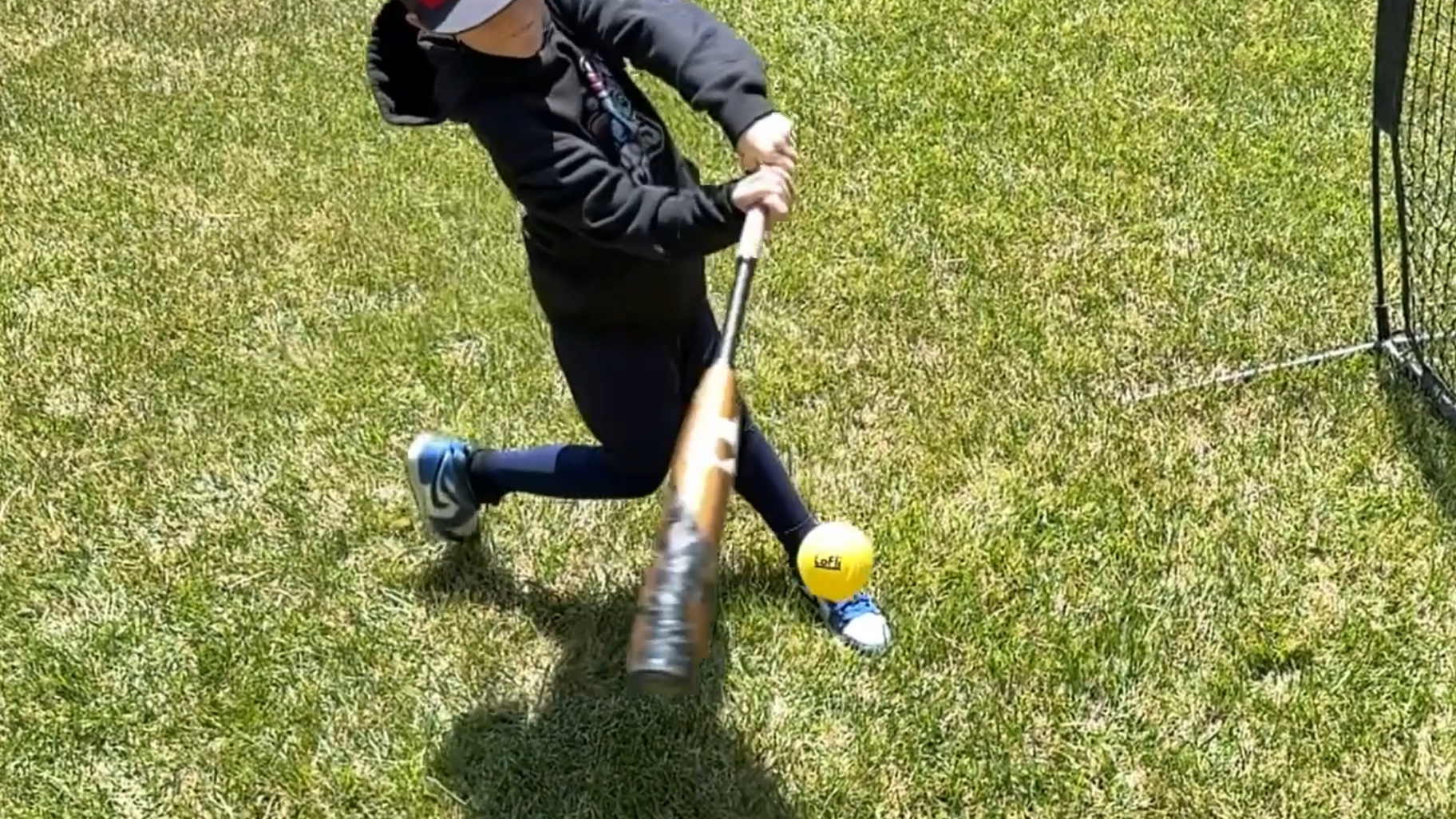
Traditional practice balls have a habit of failing right when the training gets intense. Hollow plastic balls are notorious for cracking after just a few sessions with a real bat. Once they crack, their flight becomes unpredictable and they eventually become unusable.

Weighted balls are generally durable because of their thick rubber shells, but they are prone to leaking sand if the seams are compromised.
LoFli limited flight balls are built to last. The material is designed to be compressed and return to its original shape instantly. Whether you are using a wooden bat or a high-end composite BBCOR bat, these balls are more durable than typical hollow plastic practice balls. This makes them a more cost-effective choice for long-term backyard use.
WHAT OUR USERS ARE SAYING:
"These are exactly what I needed for my 10-year-old. We have a small yard and he was constantly hitting balls over the fence. The LoFli balls feel like a real ball when he hits them but they actually stay in the yard!!!! Best investment for his swing this year." : MIKE R.
"I use these in my basement during the winter. They have the perfect weight (5oz) which is hard to find in a safety ball. I can throw them against the wall and they don't leave a mark. Highly recommend for anyone stuck training indoors." : SARAH D.
"Was using weighted balls for soft toss but these are way better. My players get a real feel for the ball and I don't have to worry about anyone getting hurt if a ball gets squared up back at me. Awesome product LoFli!" : COACH BRENT
In the battle of Weighted Training Balls vs. Limited Flight Baseballs, the winner depends on your goals.
Choose Weighted Balls if:
Choose LoFli Limited Flight Baseballs if:
Visit our home page to see how our limited flight technology is changing the way players practice at home. Whether you're a high school athlete looking to get extra reps or a parent helping a Little Leaguer find their swing, the right equipment makes all the difference. Stop chasing balls over the fence and start training with the feel of a real baseball.
.png)